
“The human brain comprises approximately 86 billion neurons that “talk” to each other using a combination of electrical and chemical (electrochemical) signals. The places where neurons connect, communicate and respond with each other are called synapses.“
Initial drawing
Re-engaging with a core idea that the skin is an interface between the person within and the world around us, it means that the skin is a meeting point, of the forces, influences, agents inside us and those outside. It is the result of this collaboration and conflict that we are who we are, and how we seem to be.
I wanted to experiment with this idea by working collaboratively with someone who is different in many dimensions to myself. Mallika Das Sutar, one of the main member artists of the Chander Haat collective, kindly agreed to be the co-operating and opposing forces. She offers difference of gender, nationality, culture and language.
Three sheets of drafting film were hung in a doorway, which immediately emphasised the relationship between interior and exterior. The subsequent interaction was instinctive – sometimes led, sometimes escaping or avoiding.
The work is currently housed in Kolkata as part of the Chander Haat collection.


Further development
Although my previous work, Plasm, was hung in the Thames Side gallery to enable viewing from both sides, it was primarily intended to be viewed from the “front”. In contrast, Synapse-scape was created on both sides right from the initial mark-making between Mallika and I, and when I continued the painting back in my studio, I carried on working on both sides. I wanted to emphasise the differences in how the paint and oil pastels layer and change opacity. And then there is the change of how we read things from left to right – which is then reversed.
Through this continuation, I tried to sustain the feeling of a neurological fission as created by the interaction between myself and Mallika. In an era when digital technology is so relied on for human contact and every moment of connection feels fleeting, I wanted to harness this moment of physical push and pull, to make it last. In my practice, the meeting of two real people is often the starting point for my works- even if the piece is digital. It is important to me to retain the original human interaction throughout the subsequent formation of the work.
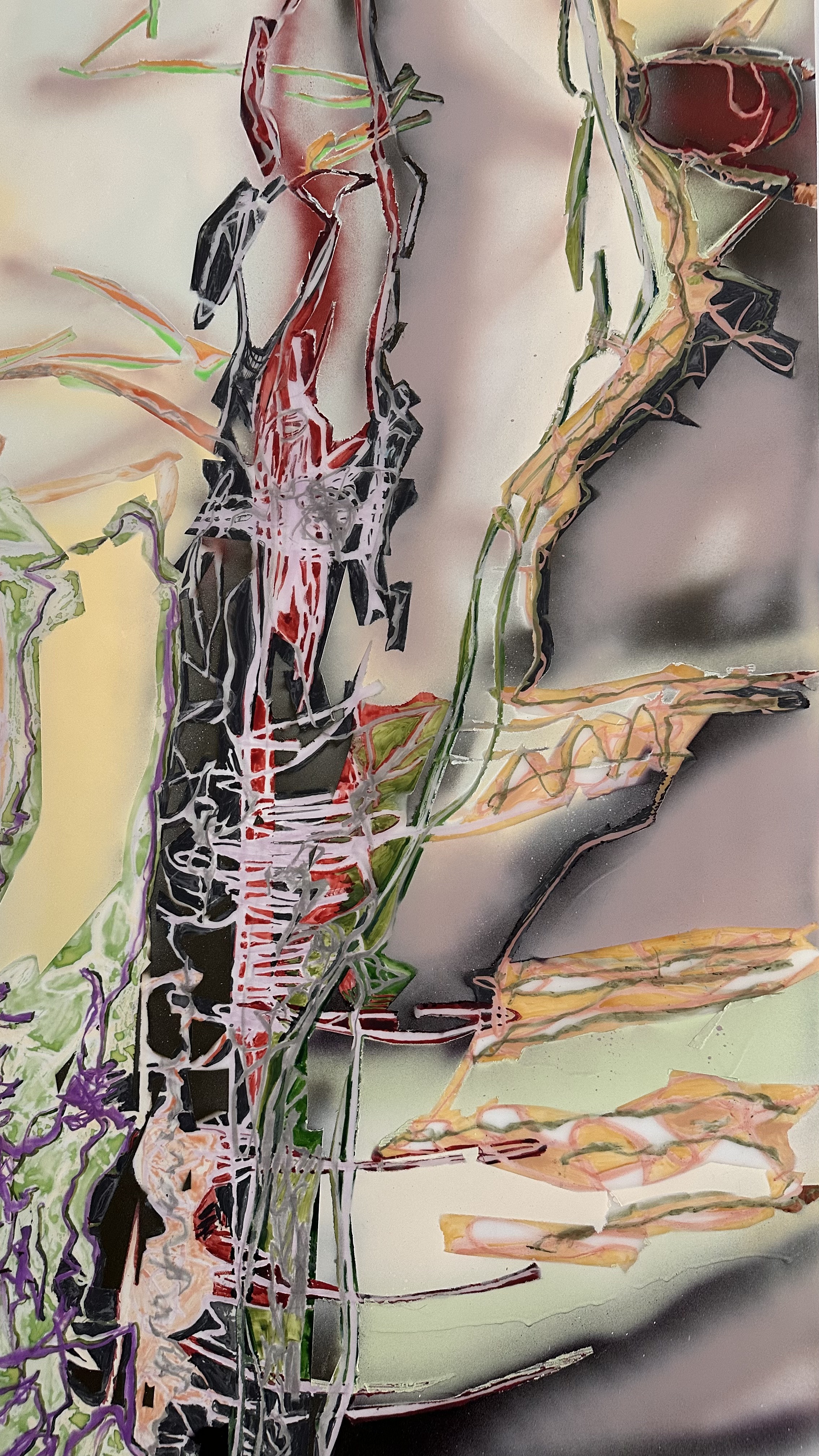
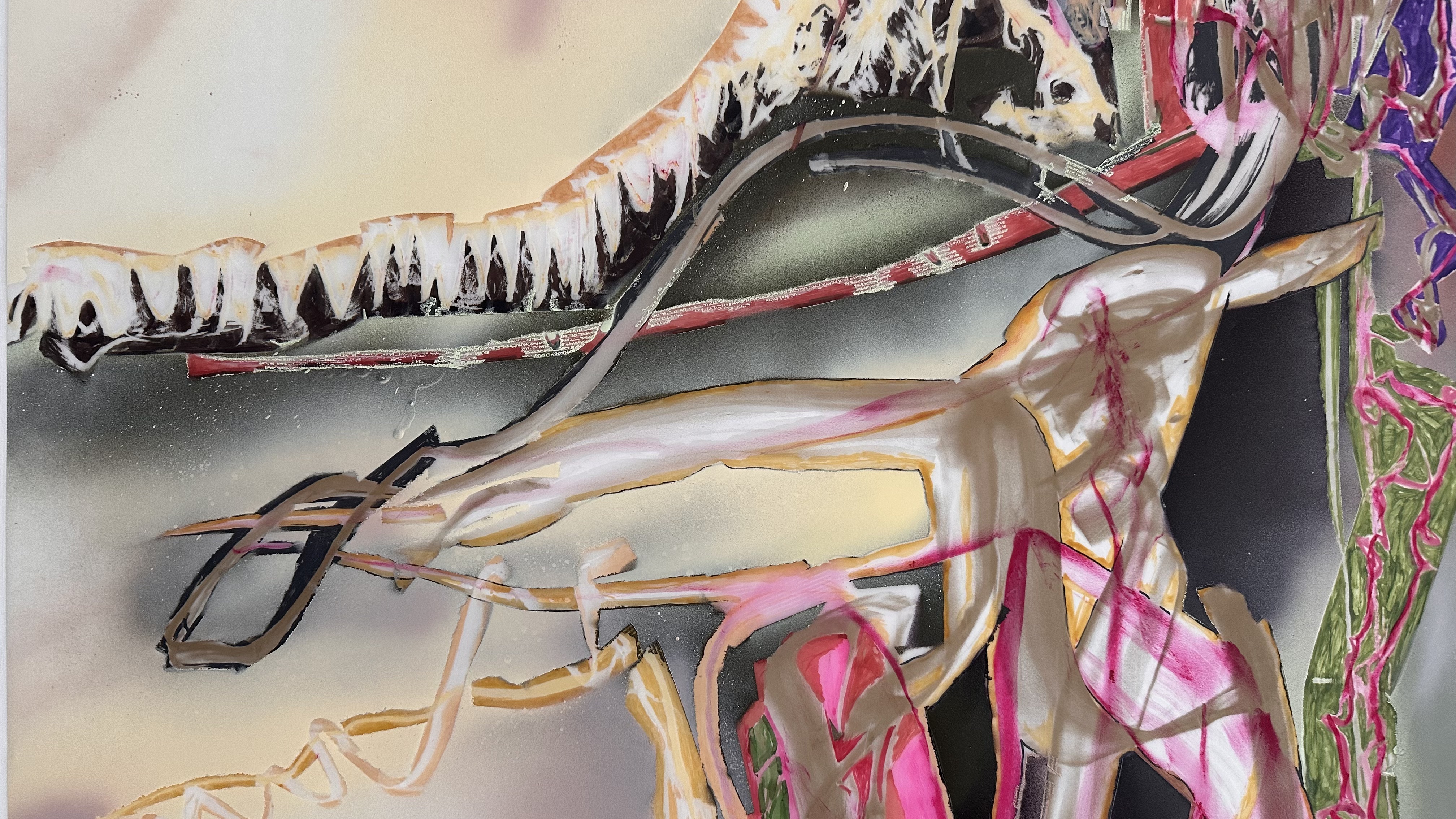

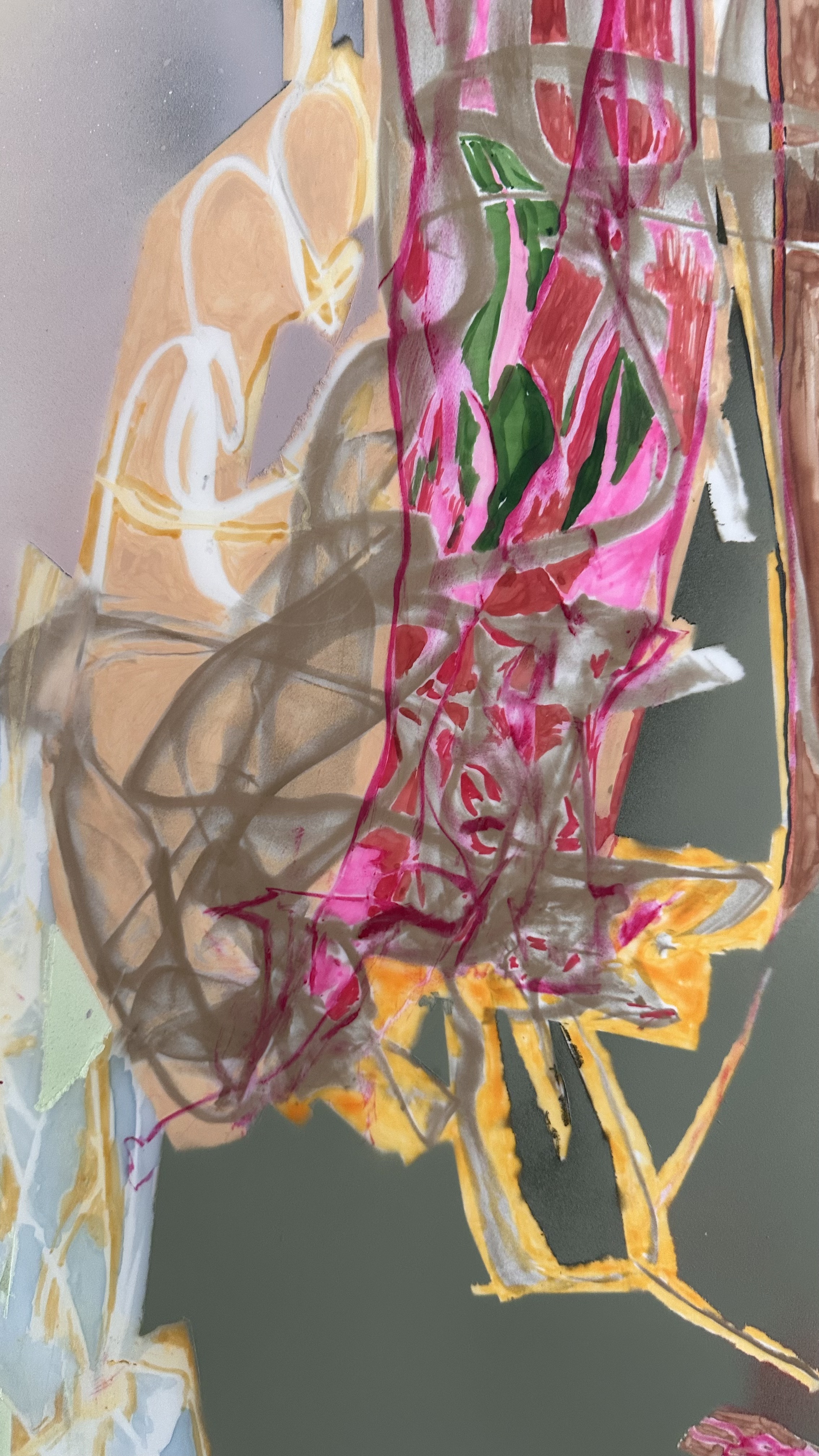
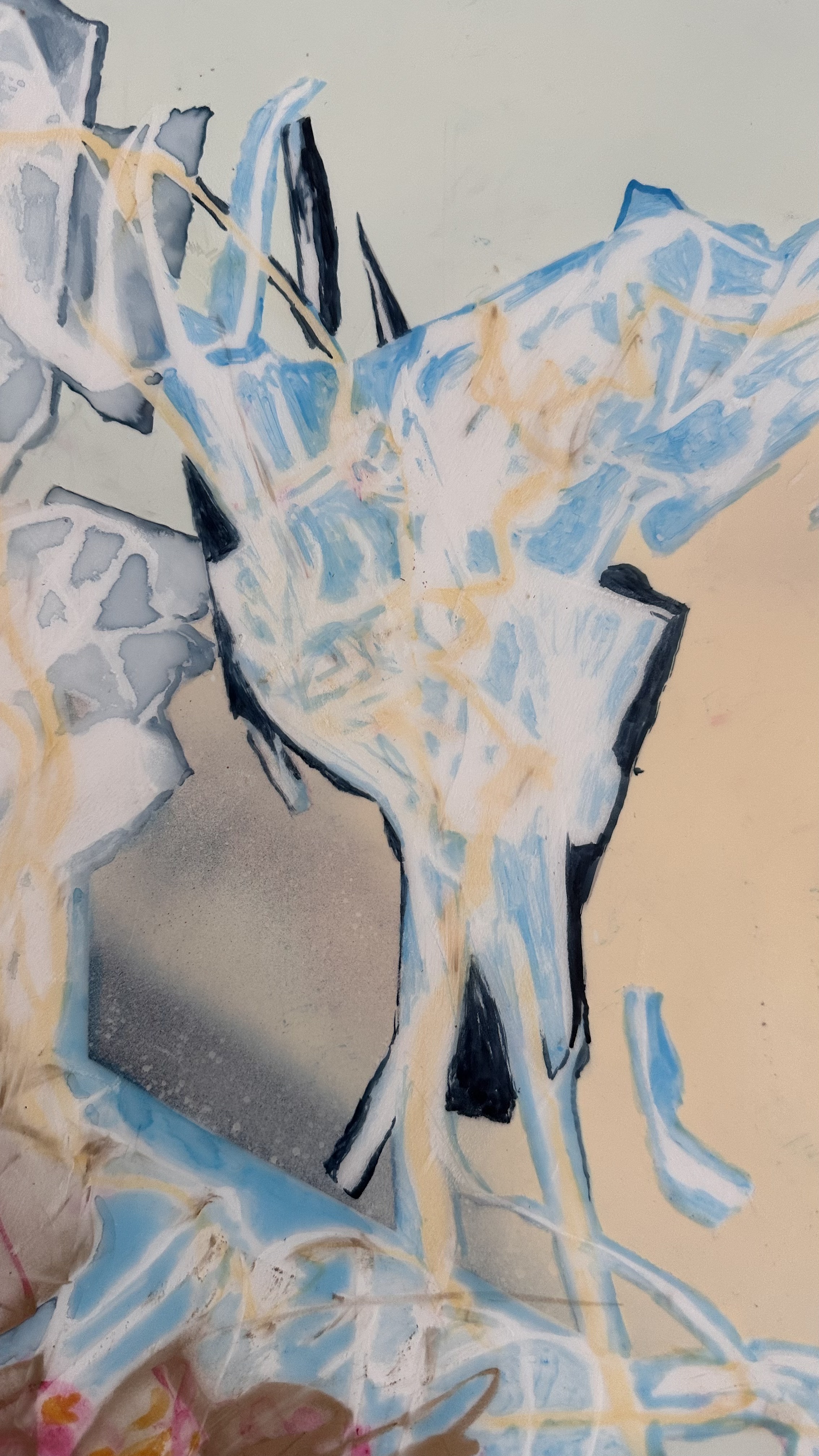
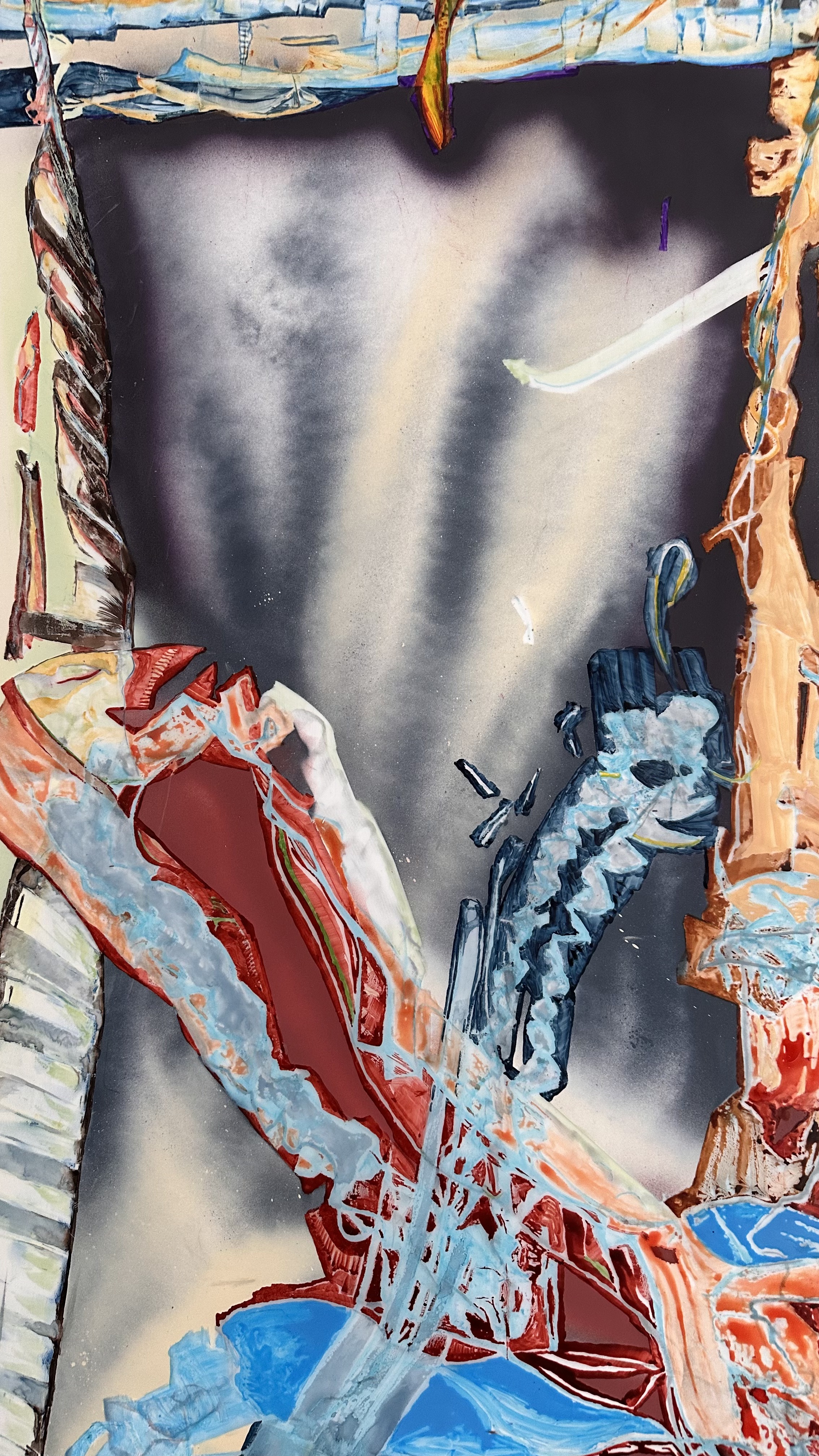
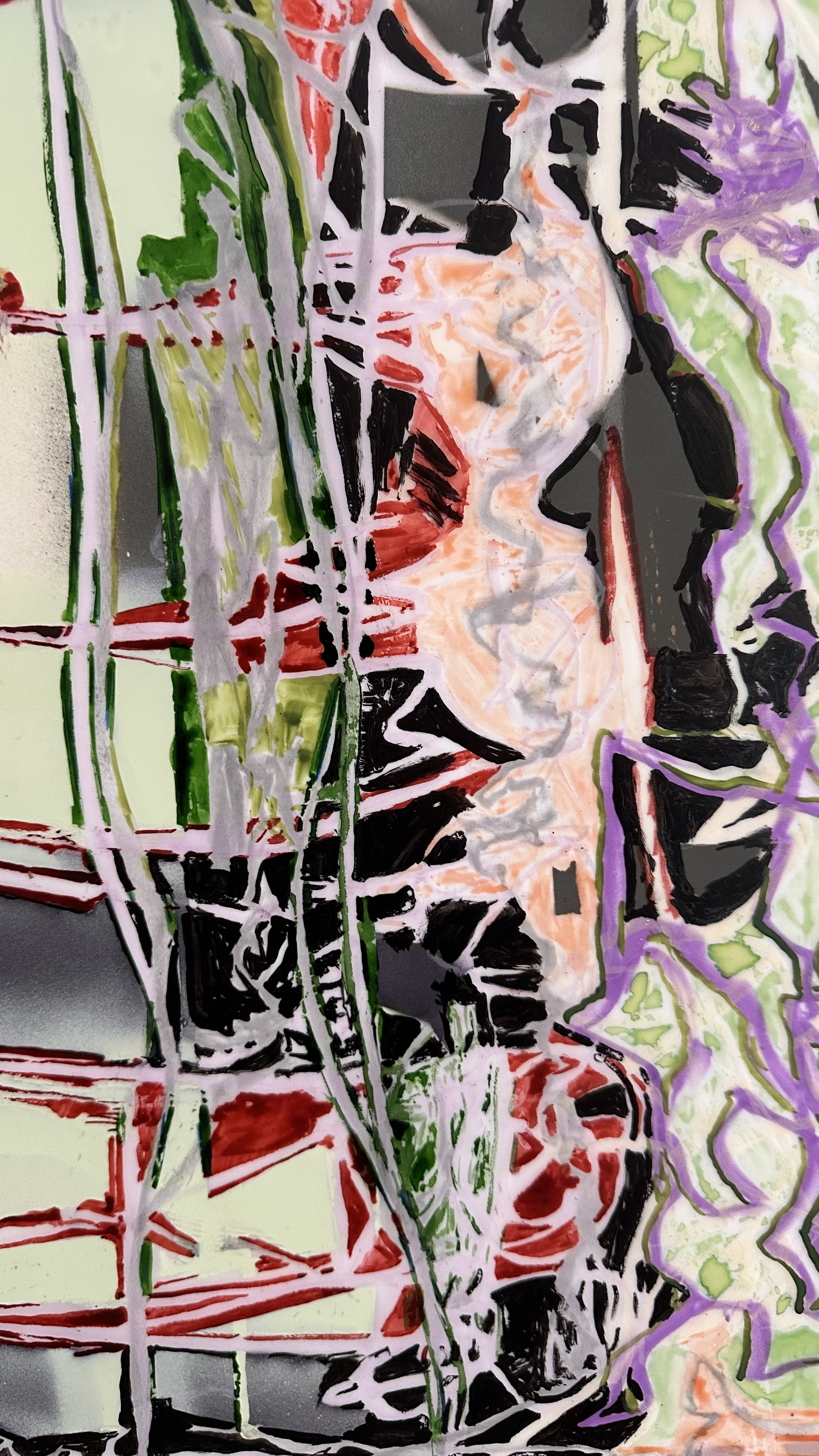
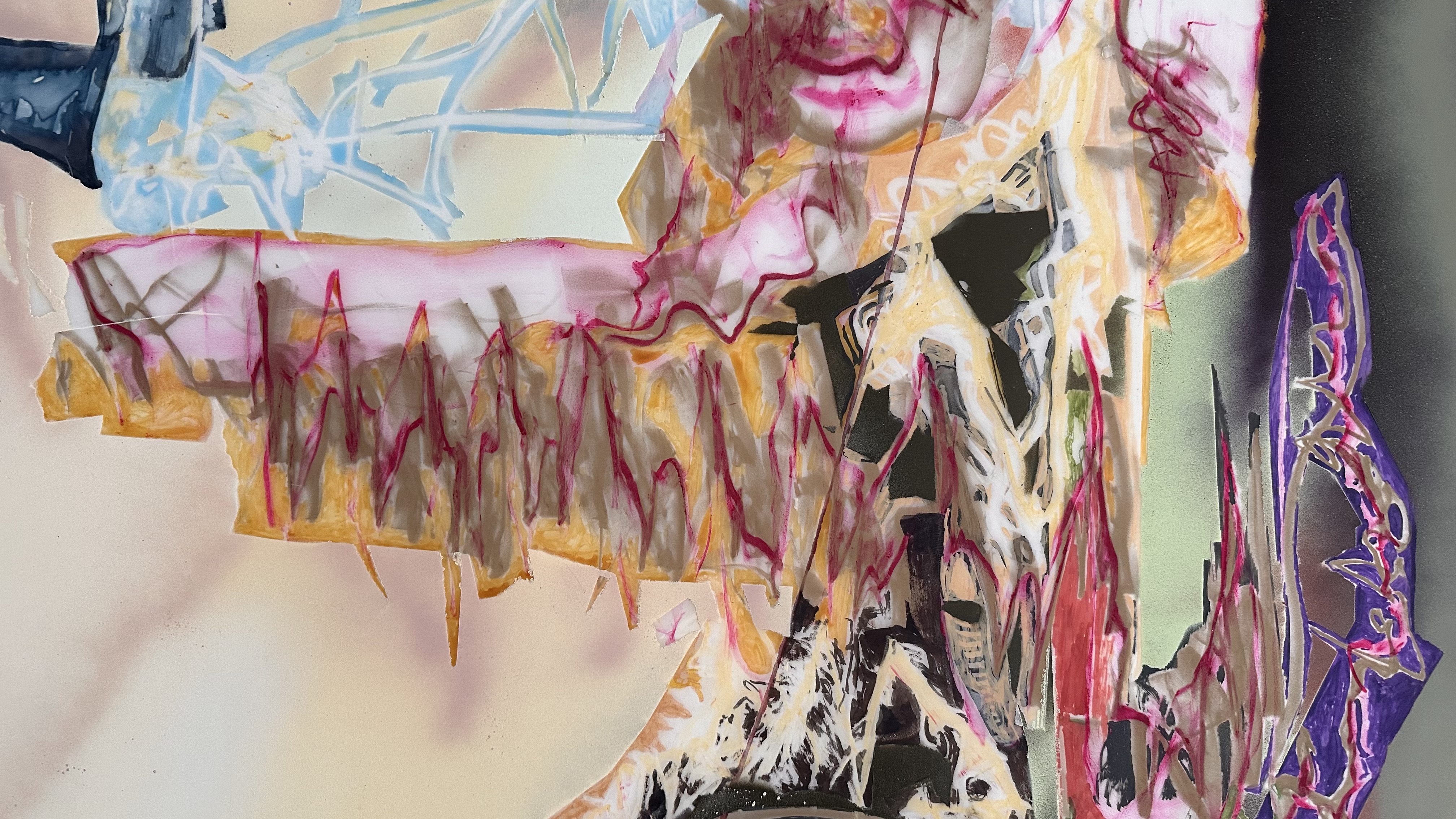
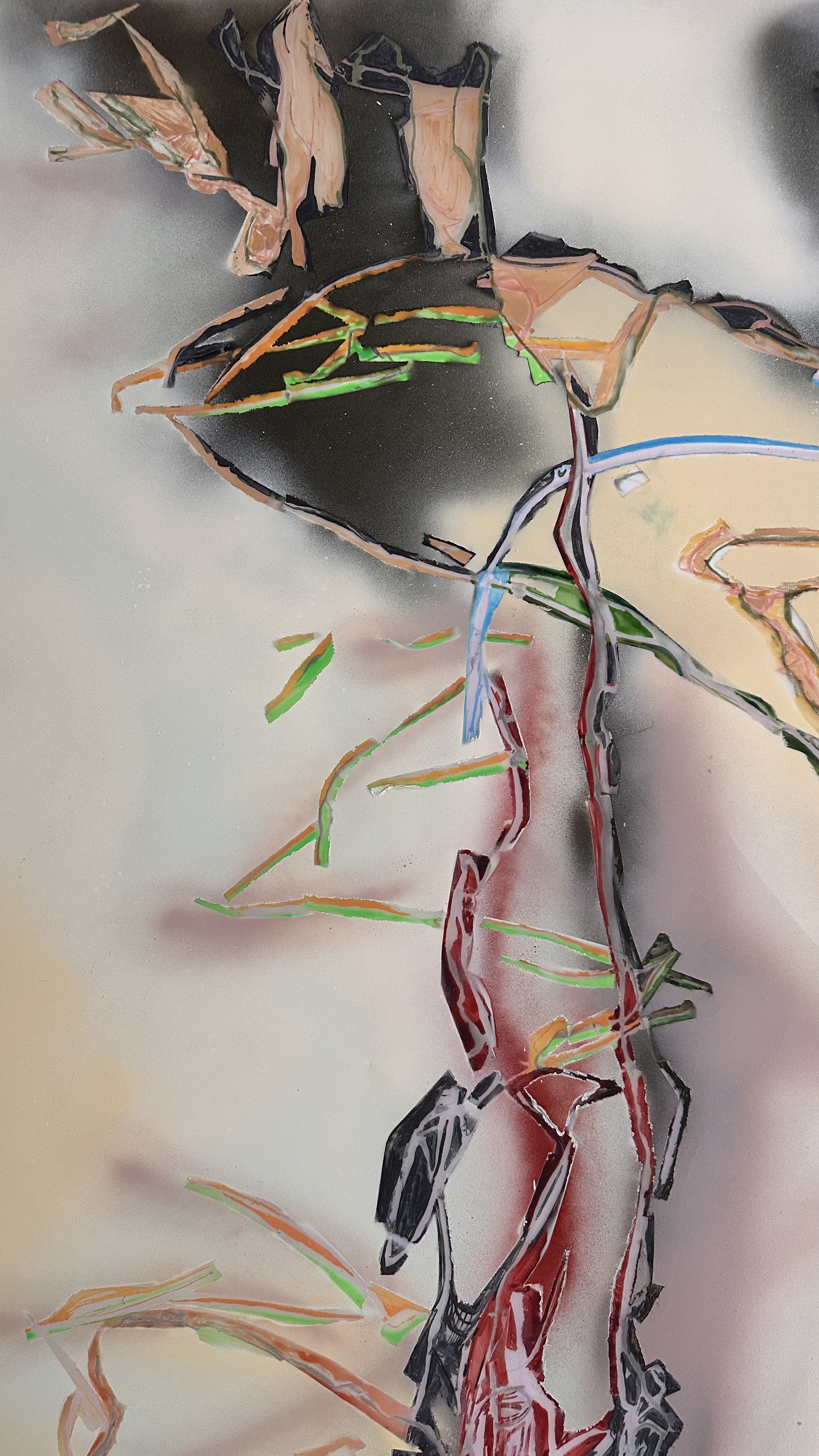

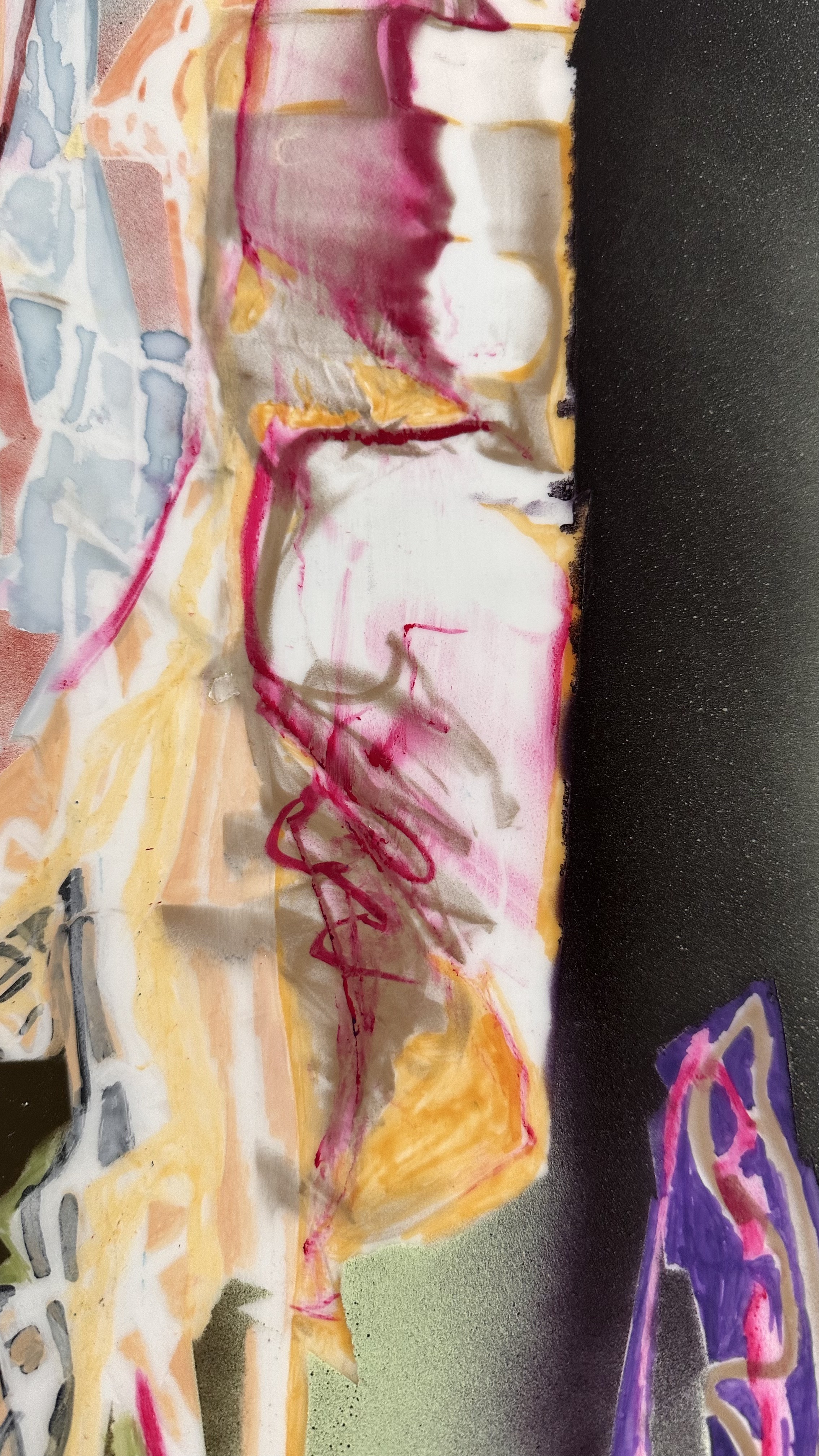
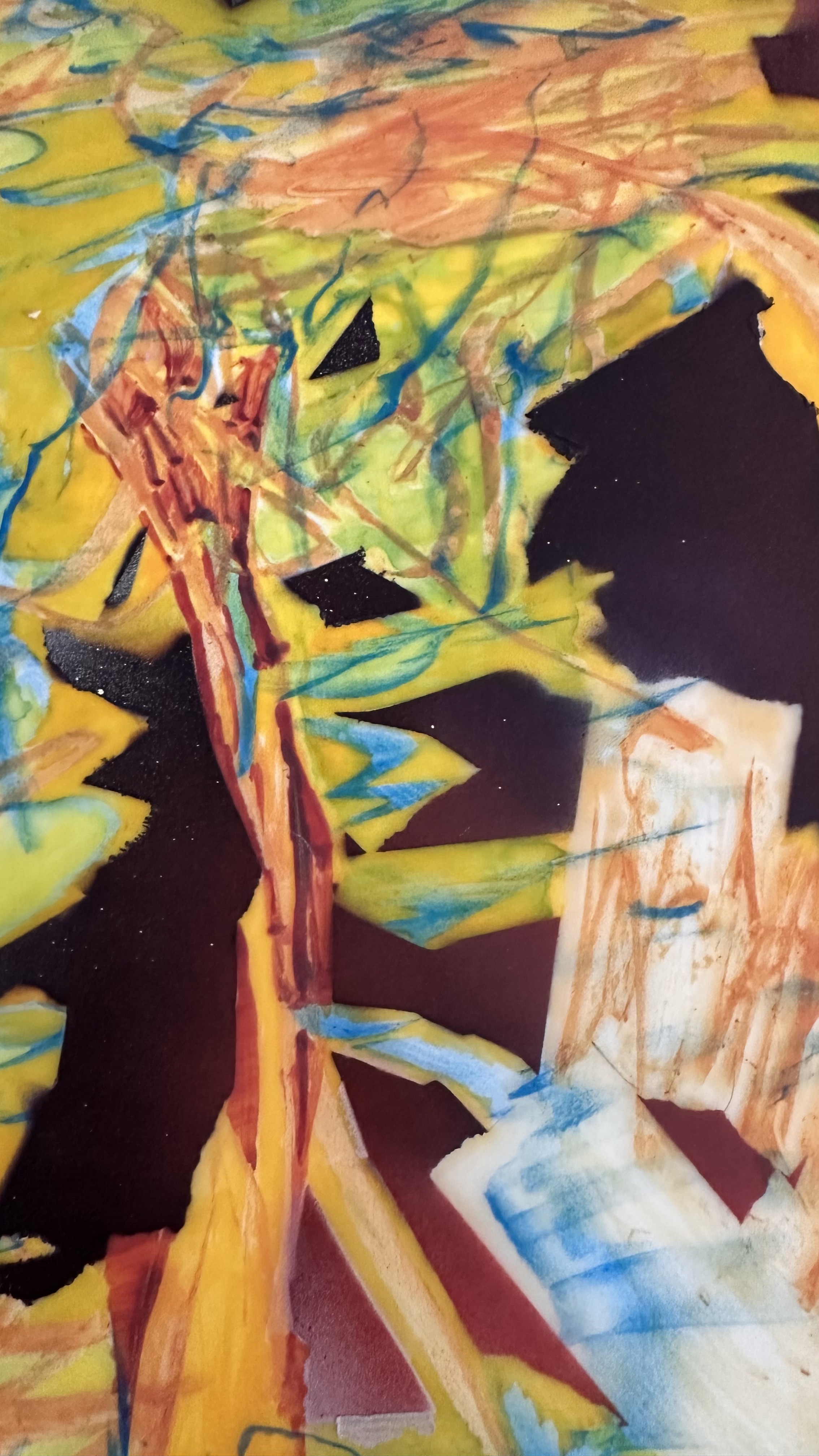
Synapse-scape details